
If somebody doesn’t like the look or feel of your subject line, they won't read your email. That may sound like an exaggeration, but it’s true.
The best email subject lines are short, personalized, and come with laser-sharp context included. If your subject line feels too markety, too cheesy, or just boring, your recipient is either going to ignore it or send it to trash.
You can easily improve your subject lines and get better open rates for your emails by following a few simple tips. This article will cover them all.
In this article:
Email subject line best practices in 2026
Ready-to-use email subject line examples by type
Copy-and-paste subject line formulas
Common mistakes and spam trigger words to avoid
Why a professional sender address matters as much as the subject line
What makes a good email subject line in 2026?
Good subject lines in 2026 are simple. They’re honest about what’s inside, short, and don’t try to sell anything before the email is even opened.
Inbox providers like Google are cracking down on tricks like fake “Re:” or “Fwd:” prefixes and spammy words. If your subject line looks like a trick, it’ll likely end up in spam. Here’s how to make sure it doesn’t.
Getting length right
A subject line that is too long can be hard to read, and it may get cut off on mobile.
Mobile previews usually only show between 33 and 45 characters of a subject line. That’s important because around 60% of people open emails on mobile. If you’ve included any key details after that 33rd character, then half of your message is going to be cut off, and the reader will never see them.
Short is generally better. When we email our friends, we tend to write short, descriptive subject lines, and our brains are hard-wired to trust these kinds of messages. Aim for 2–6 words and keep any key messages inside the first 33 characters.
Use the preview to build interest
This is where you can add some context to your subject line. The preview text appears next to or below your subject line and gives you up to 130 characters to work with.
If you’ve stuck to your 33 characters on the subject line and tried to signal some value but not give the entire story away, then the preview text can help to move that story along. You don’t want to repeat what’s already been said. Instead, try to add the next layer of detail that is going to draw the customer in. Here’s an example:
Subject line – Look like a pro in every email you send (39 characters)
Preview text – Get an address on your own domain with Spacemail™. Plans start at $0.68/mo. (75 characters)
The Subject line drops the first breadcrumb with a very short, easy-to-understand benefit. Then, when the user asks, “How can I look pro in every email?” the Preview text gives the answer.
Choose an address people trust
You want a professional-sounding email address. Even better than that, you want an email address that is tied to your business. When your email lands in a customer’s inbox, their brain is going to do a quick calculation of how trustworthy it sounds and whether it’s worth their time to open and respond.
Any emails that end in @hotmail, @gmail, @yahoo, etc., are instantly going to increase suspicion. That’s because anyone can create a free email like this, slap a brand name on it, and try to appear legitimate. And sometimes they might be. But your customer has most likely learned over time that these emails are best ignored.
The best option is to create an email on your own domain, for example @mybusiness.com, and you’re instantly saying to the customer, “This is my brand, I believe in it enough to invest in a pro email, and this email is worth your time.” You’re giving your email the best chance of being opened. Plus, you can set up a professional email in minutes for a small cost.
Best email subject lines by type
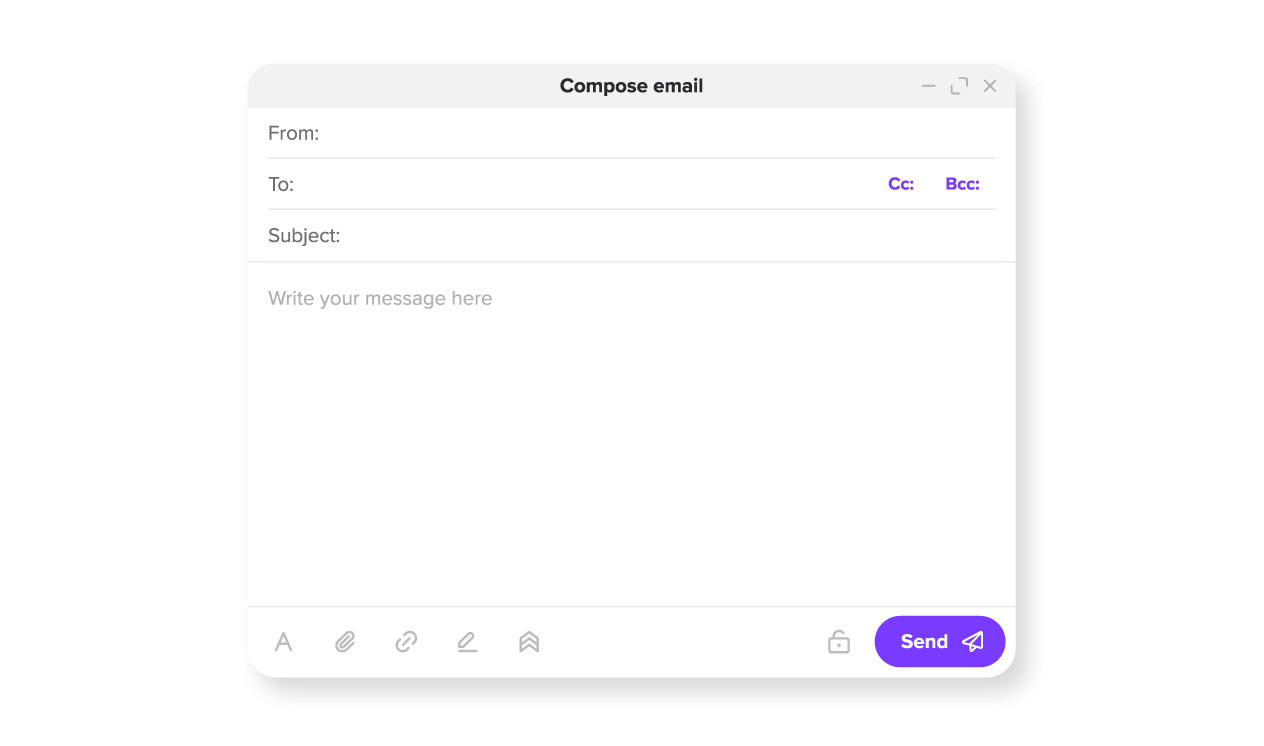
The old way to grab attention with a subject line was a clickbaity bit of text. But people are getting better at spotting these, and so are spam filters. A better way to introduce yourself is to tailor your subject line to the person you’re sending to, the email you’re writing, and the industry you’re in.
An ideal customer profile template can help you get a clear picture of who that person is, and what they’re interested in. But if you don’t tailor your subject line, the person receiving it will most likely put it in spam or ignore it completely.
Here are a few ready-to-use examples that will help you make an impression.
Sales and promotional subject lines
People know when you’re selling, so there’s no point hiding it. Be upfront instead. Lead with a real offer, a real number, or a real deadline, and let that do the work.
[Product], [X]% off until [day]
Example: Running shoes, 30% off until Friday
Why it works: A real number and a real deadline make the urgency credible.[Product] from $[X], [N] hours only
Example: Holidays from $49, 48 hours only
Why it works: It leads with the price and a short, specific window, so it’s easy to scan.Turn your [X] into customers
Example: Turn your followers into customers
Why it works: It turns something the reader has into the result they want.[Product] for less than [everyday item]
Example: A meal kit for less than takeout
Why it works: Anchoring the price to something familiar makes the value land instantly.Everything you need to [outcome], [X]% off
Example: Everything you need to garden, 25% off
Why it works: It leads with the outcome and lets the discount close the deal.
Newsletter subject lines
Your newsletter readers have already said yes to hearing from you. Now you need to keep them opening. Promise something specific and worth their time, so each issue feels like a quick win, not homework.
[Month]: 3 things worth your 5 minutes
Example: March: 3 things worth your 5 minutes
Why it works: It promises a small, defined time cost.13 [industry] campaigns that actually convert
Example: 13 email campaigns that actually convert
Why it works: It promises a concrete, skimmable payoff, and proven results over theory.The [X] mistake most new sellers make
Example: The pricing mistake most new sellers make
Why it works: It creates a curiosity gap, because readers open to check whether they’re making the mistake themselves.Why the best [things] are [unexpected trait]
Example: Why the best coffee beans are ugly
Why it works: A counterintuitive claim sparks curiosity.A [customer type] story you’ll want to steal
Example: A small-shop story you’ll want to steal
Why it works: It signals practical value with a light touch of personality.
Welcome and onboarding subject lines
Welcome emails usually get opened because people have just signed up and are expecting them. So you don’t need to work hard for attention. Use the subject line to confirm what they did and show them the next step.
Your [account] is ready. Here’s step one
Example: Your membership is ready. Here’s step one
Why it works: It confirms the action and points to one next move.Welcome in. Your first [outcome] is [N] steps away
Example: Welcome in. Your first class is 2 steps away
Why it works: It gives the reader a near goal they can count down to.Your [purchase] is here. Let’s put it to work
Example: Your camera is here. Let’s put it to work
Why it works: It recognizes the purchase and moves straight to first use.[First task] in [N] minutes
Example: Set up your first budget in 5 minutes
Why it works: A concrete outcome with a low effort barrier.The 3 [tips] worth knowing on day one
Example: The 3 stretches worth knowing on day one
Why it works: Insider framing makes setup feel like a shortcut.
Follow-up subject lines
Good follow-up email subject lines don’t push. A gentle nudge is all you need. Remind them what they started, or give them what they asked for.
Your cart is right where you left it
Example: Works as written
Why it works: It’s a calm reminder, and reassurance beats pressure.[Item] is still available
Example: Your table for Friday is still available
Why it works: It refers to exactly what the reader chose.The [thing] you asked for is here
Example: The quote you asked for is here
Why it works: It delivers on a request, so readers expect to open it.A quick next step for your new [purchase]
Example: A quick next step for your new mattress
Why it works: “Quick” lowers the effort barrier after a purchase.One thing to try before your trial ends
Example: Works as written
Why it works: It turns a deadline into a helpful tip.
Re-engagement and win-back subject lines
These emails go to people who’ve drifted away. Guilt won’t bring them back, but a good reason might. Show them what’s new, or what’s in it for them.
A lot has changed since your last [visit]
Example: A lot has changed since your last stay
Why it works: The curiosity gap gives a lapsed reader a reason to look again.Your [spot] is still here
Example: Your spot in class is still here
Why it works: It’s warm and welcoming, with no guilt.Come back to [X]% off your next [order]
Example: Come back to 15% off your next visit
Why it works: A plain, direct incentive.We saved the [items] for you
Example: We saved the sneakers for you
Why it works: It uses real browsing behavior, so it feels relevant.[Task] just got easier. Take a look
Example: Booking just got easier. Take a look (36 characters)
Why it works: A real improvement gives readers a reason to return.
Seasonal and holiday subject lines for 2026
Inboxes fill up fast around the holidays. Your subject line needs to be easy to spot. Name the event, be specific about the offer, and use real dates so the urgency feels real too.
Black Friday is here: up to [X]% off
Example: Black Friday is here: up to 60% off
Why it works: It names the event first, then the headline discount. Black Friday falls on November 27, 2026.Cyber Monday ends at midnight Nov 30
Example: Works as written
Why it works: A real date is credible. Add the timezone in the preview text.The gift that [outcome]
Example: The gift that gets them cooking
Why it works: It sells what the recipient gets to do.Everything you [verb] in 2026
Example: Everything you read in 2026
Why it works: A year-in-review that celebrates rather than sells.Start 2027 with [outcome]
Example: Start 2027 with a stronger morning
Why it works: It captures New Year intent without the “new you” cliché.
Transactional subject lines
These are the emails people actually want to get, like confirmations, receipts, and reminders. The subject line just needs to be clear and easy to find later. Skip the sales pitch and stick to the facts.
Your [order] is confirmed
Example: Your booking is confirmed
Why it works: It states the fact and reassures instantly, without selling.Your password reset link, valid for [N] hour
Example: Your password reset link, valid for 1 hour
Why it works: It states the action and the expiry.Your [subscription] renews on [date]
Example: Your gym membership renews on Dec 14
Why it works: It puts the date up front, so there are no surprises.Confirm your email to finish signing up
Example: Works as written
Why it works: It explains the reason to open and what it completes.Your [order] is on its way
Example: Your order is on its way
Why it works: It’s clear, expected, and easy to find later.
Subject line formulas you can copy
Writing good subject lines is about practice. Once you start to understand the types of formulas that work for your business, you’ll get much better at creating your own. Here are some examples to get you started.
Formula | Template | Example | Best for |
|---|---|---|---|
Curiosity gap | The real reason [result] | The real reason our bread sells out | Newsletters and storytelling content |
Number | [N] ways to [outcome] this [timeframe] | 5 ways to save on groceries this week | Guides, tips, and roundups |
Benefit | Get [outcome] in [time] | Get dinner on the table in 20 minutes | Product launches and promos |
Question | Ready to [outcome]? | Ready to plan your summer trip? | Onboarding nudges and soft launches |
Urgency | [Offer] ends [day] at [time] | Free shipping ends Sunday at midnight | Final days of a real sale |
Personalization | [First name], your [item] is waiting | Maya, your custom quote is waiting | Abandoned carts and triggered emails |
Subject line mistakes to avoid
If you don’t want inbox providers to downgrade your reputation or send your emails straight to spam, there are a few mistakes to watch out for.
Spam trigger words
There are certain words that, when sent in an email, trigger a spam filter, so all you need to do is avoid them and your email will sail through, right? Wrong. Modern spam filters use AI to understand the intent behind a subject line. Even if they haven’t seen your subject line before, they can still tell how likely your email is to be spam.
Old tricks don’t fool modern spam filters. A classic was to include “Re:” in the subject line to trick someone into opening your email. Modern spam filters check whether a message is really part of an existing conversation. If it isn’t, the filter flags the fake reply, and that can hurt how filters score the sender’s future emails.
The better approach to avoid the spam folder is to send email people want, with a subject line that shows you know who they are and why you are in their inbox. Email only people who opted in, and remove inactive addresses regularly. Inbox providers track how people respond, so a small, engaged list beats a big one that ignores you.
All caps, exclamation marks, and emojis
“Your domain expires Friday” will get more attention than “URGENT!!! ACT NOW 🚨🚨” ever will. Shouting in a subject line looks like spam, and people treat it like spam. They’ll ignore it, delete it, or report it, and every spam report chips away at your reputation as a sender.
The fix is to write like a real person. Use sentence case, let real details like dates and deadlines create the urgency, and stick to one emoji at most.
Why your subject line isn’t working (it might not be the subject line)
If your email account isn’t optimized for deliverability, even the world’s greatest subject lines won’t help your emails land in the inbox. That’s because your subject line is just one factor in a long list that decides whether your email gets delivered or not. That list looks like this.
Set up SPF, DKIM, and DMARC
These are email authentication protocols. They tell the receiving server that you are allowed to send email from your domain, that the email being received hasn’t been tampered with during transit by a scammer, and what to do if the first two checks fail.
Buying a domain name doesn’t automatically set up SPF, DKIM, and DMARC That means you could be sending email from your new domain and Google or another email provider is unable to verify that you are who you say you are, which is going to affect your deliverability big time.
Protect your domain reputation
If you make it through the authentication checks, then your domain reputation is checked next. This is like a credit score, meaning it’s something that takes time to build up, especially if it’s already in a bad place. A bad place could mean someone used the domain to send spam before you bought it. Just like a bank checking a loan application, providers calculate your trust score using metrics like:
Bounce rates
Complaint rates
Engagement patterns
Sending consistency over time
If these fail, filters can block your emails even if you’ve passed the authentication checks.
Send emails worth opening
Only once you pass the previous checks do your subject lines and email content start making a difference. This is why your subject lines can be rock solid, but if the foundations aren’t there to help you pass the authentication and reputation checks, then you’ll still come up short.
For your email content to pass, it’s going to be a lot more of the stuff we’ve already covered in this article, like avoiding spammy keywords, all caps, and actually trying to sound like a genuine person who has a good product or idea to share. On top of that, you need to be careful that you’re not linking to any spammy websites, that you have good email etiquette, and that any files that you include in your emails are legit.
The easy solution
The good news is you don’t need to become a DNS expert to get the basics right. A good business email provider like Spacemail takes a lot of the technical work off your plate. Many will set up SPF and DKIM for you, or walk you through it step by step, so receiving servers can tell your emails really come from you.
They also send your mail through servers with a solid track record, so you’re not starting from scratch every time you hit send. With those basics covered, you’re in a much stronger position. The rest comes down to what you send, how you send it, and how you sign off. But with the tips above on the best email subject lines, you can’t fail, right?
Frequently asked questions
Aim for 2–6 words, and keep the key message inside the first 33 characters. Mobile previews usually show only 33 to 45 characters, and around 60% of people open emails on their phone, so anything past that point risks getting cut off.
Use emojis sparingly, and no more than one per subject line. Multiple emojis, ALL CAPS, and exclamation marks make a subject line look like spam, which can lead to lower open rates and more spam reports. Catchy email subject lines work better with specific details, such as a date or deadline, rather than visual effects.
Modern spam filters use AI to read the intent behind a subject line, so dodging trigger words won’t get you through on its own. Steer clear of hype, clickbait, and old tricks like adding “Re:” to fake a reply. Subject lines that get opened sound like a real person who knows who they’re writing to and why.
Tailoring your subject line to the person, the type of email, and your industry gives it a much better chance of being opened. Personal details work especially well in abandoned cart and follow up email subject lines.
A preheader, also called preview text, is the short line that appears next to or below your subject line. You get up to 130 characters, so use it to add the next layer of detail rather than repeating the subject line.

Suggested articles



Share your thoughts