
The difference between a web designer and a web developer can be confusing, especially if you’re just starting to build your online presence. Although they overlap, website design and web development are two different disciplines. Each requires different skill sets and perspectives.Knowing the difference can help you determine who to hire when launching or updating a website. In this post, we outline what makes these two disciplines distinct, and when you might need one or the other.
What does a web designer do?
A web designer is a creative professional who uses the principles of graphic, UX and UI design to produce visually appealing and navigable websites that are a joy to use.While not all UX/UI design is exclusive to web design, all websites should involve UX and UI principles. A web designer typically combines both to shape how a website looks, feels, and functions. Let’s quickly clarify the difference between these two disciplines:
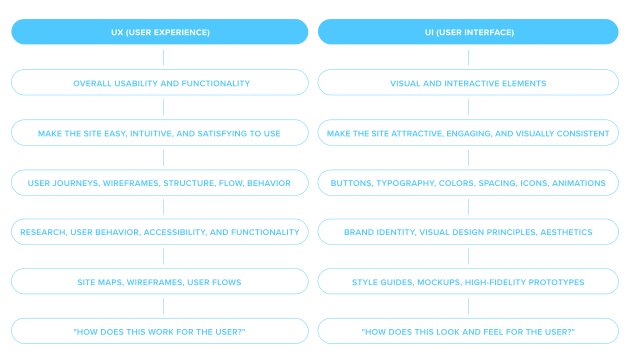
Beyond UX and UI, a web designer’s job is to align a visual design with their client’s brand identity.To do this, designers commonly use tools like Figma, Sketch, or Adobe XD, and may also turn to visual tools like Photoshop or Illustrator for assets and branding elements. Once the design is finalized and approved, the web designer typically hands it off to a developer, who will turn the static design into a live, working website.
With the sheer breadth of options out there, you can always create a website yourself. Web designers, however, possess a level of experience, skill, and expertise that out-of-the-box solutions cannot match.
What does a web developer do?

Once the design phase is complete and handed off, the web developer steps in to bring the website to life using code. Their role is to make sure everything works as it should — that every button, form, animation, and function performs reliably in a real-world environment.
There are generally three types of web developers: front-end, back-end, and full-stack. Each plays a different role in the website build process, though their work often overlaps in practice.
Front-end developer
Front-end developers are responsible for building the part of the website that users see and interact with directly. This includes layout, fonts, colors, buttons, dropdown menus, image sliders, and all the interactive elements a visitor might engage with.Front-end developers take the wireframes and mockups from the web designer and turn them into real, functioning web pages using languages like HTML, CSS, and JavaScript.They may also work with frameworks such as React, Vue, or Bootstrap, which provide pre-built components to speed up development. Because the front-end code runs in the user’s browser, it’s referred to as client-side logic.
Back-end developer
A back-end developer handles the systems that power your site but are invisible to the user. This includes storing and retrieving data from a database, processing forms, managing user logins, and handling search functionality. These tasks run on the website’s hosting server, and are often referred to as server-side logic.Back-end developers typically work with server-side languages such as PHP, Python, Node.js, or Ruby, and interact with tools like databases, APIs, and server architecture. Their work ensures that the site performs well, remains secure, and handles data correctly.
For example, imagine a customer visits an online store, looks up an item, and clicks the “Add to Cart” button. While the front-end developer is responsible for how the button responds, whether it changes color, animates, or displays a message like “Item added!”, the back-end of what happens behind the scenes.A back-end developer builds programs for calculating totals, processing the payment, updating the inventory database or storing order information securely on the server.
Full stack developer
A full-stack developer is someone who can handle both the front-end and back-end, essentially building the entire website from start to finish. These developers are versatile and often take on solo projects or work with startups where one person needs to cover a lot of ground.While full-stack developers may not go as deep into each layer as a specialist would, they offer a flexible, end-to-end approach to getting a website up and running.
What is the difference between web design and web development?
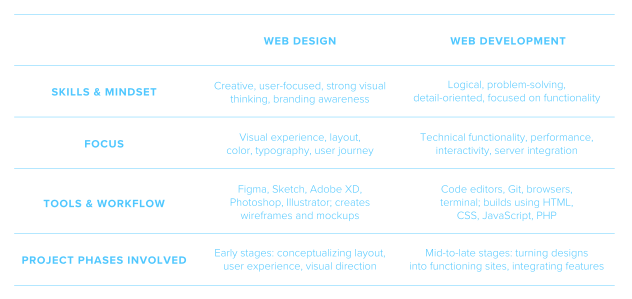
Which role do you need for your project?

One of the biggest challenges when building your online presenceis determining exactly what kind of resources you need. Do you need a designer, a developer, or both? The answer depends on your goals, your timeline, and the complexity of your site.
When to hire a web designer
If your priority is to create a website that looks polished, feels consistent, and reflects your brand’s personality, a web designer is the right person to bring that vision to life.There are plenty of website platforms and tools that handle the back-end functionality for you using pre-built, one-size-fits-all systems, whether it’s for processing payments or collecting user data.What these tools often can’t do well is help you express your brand identity. That’s where a web designer comes in. If you already have a brand in place, a designer can take your existing fonts, colors, imagery, and tone, and translate them into a cohesive, user-friendly website.If you don’t have a clear brand identity yet, a web designer can help you create one. They’re skilled in establishing the visual language that makes your business feel professional, trustworthy, and unique.
When to hire a developer
For projects involving complex functionality or custom logic, a web developer is essential.Say, for example, you need to sync e-commerce store inventory with a third-party supplier or pull live data from an external API. A developer can create and maintain these integrations, automate workflows, and ensure that data flows smoothly between systems.If your needs are more straightforward, many modern hosting platforms, including Spaceship, include built-in tools that make it easier to get started on your own. You could use one-click installers like cPanel or Softaculous App Installer to launch content management systems, ecommerce tools, or booking plugins quickly.These tools often include visual interfaces and templates, so even basic websites can be assembled with minimal technical effort.
When you need both
There are instances when both a web designer and a web developer are needed.Say, for example, that you’re planning a full website overhaul. You want to refresh your brand, modernize the design, and add new features like a customer portal, booking system, or integrations with external tools. These kinds of projects require both visual design and technical acumen.
Can one person do both?
For smaller or simpler projects, one person can sometimes do both jobs. These all-in-one professionals, or “unicorns”, combine design and development skills to take a project from start to finish.They might design your site in Figma, build it with clean and responsive code, help you choose a hosting platform, and implement basic features like forms or login systems. Hiring a unicorn can be a smart, cost-effective option for early-stage startups, small businesses, or personal projects with straightforward requirements.Still, unicorns tend to be generalists. They can cover a lot of ground, but they may not go as deep as a specialist. If your project demands advanced motion design, custom server-side logic, or brand-level polish, working with a dedicated team, even if it’s just one designer and one developer, often produces better results.
|
How do web professionals charge?

How web professionals charge often depends on the individual and the projects. They may use any of the following models.
Fixed price per project
Before any work begins, you might agree to a one-time fee with a web professional. This model is based on the full scope of the project, making it a great option if you have a clear idea of what needs to be built and what the final deliverables should be.It gives you cost certainty upfront, which is especially helpful for budgeting. It also means that any major changes to the scope later on may require renegotiation or additional fees.
Tiered packages
Tiered packages are a pricing model where web professionals offer different levels of service at set price points. They not only give you flexibility to match your needs and budget, but also help you get a clearer idea of what your requirements are—especially if you’re just starting to plan your site.
Hourly rates for extra work
Hourly rates for extra work are often used alongside fixed-price projects or tiered packages to cover anything that falls outside the original scope. This gives you some flexibility in case of additional features, new pages, or unexpected revisions.While it’s a practical way to handle unexpected changes, it can also lead to extra costs you didn’t initially plan for. That’s why it’s important to clarify hourly rates upfront and understand what’s included in your initial agreement.
Monthly maintenance retainers
Monthly maintenance retainers are perfect for business owners who want peace of mind after their site goes live. They cover essentials like software updates, backups, minor edits, and security monitoring, ensuring your website stays safe and up-to-date.
Choose the right partner for your next website project
Understanding the difference between a web designer and a web developer can make a big impact on the success of your website project. While designers focus on visuals, branding, and user experience, developers bring those designs to life through code and functionality.
Whether you choose to work with a specialist, a full-stack generalist, or an agency, having a clear understanding of what each professional offers will help you make smarter decisions.
Building a website doesn’t have to be overwhelming. With the right knowledge, and the right team, you can move forward confidently, find the right partners, and take the next step in bringing your online presence to life. Ready to get started?Explore Spaceship’s web hosting options to find the perfect foundation for your site.
Frequently asked questions
A web designer focuses on how a website looks and feels. They handle the layout, color scheme, typography, and user experience — making sure the site is visually appealing and easy to navigate. A web developer, on the other hand, writes the code that makes the website function. Developers take the designer’s vision and build it using programming languages and frameworks, often handling both what the user sees (front-end) and what happens behind the scenes (back-end).
It depends on your needs. If you want a custom design that reflects your brand, improves user experience, or gives your site a polished look, a web designer is the right choice. If you need custom functionality — like a booking system, e-commerce setup, or integrations with other tools — you’ll likely need a web developer. For full projects, many people choose to work with both, or with a full-stack professional or agency who can handle everything.
Some web developers have design skills and can create basic layouts or customize templates, but not all are trained in visual or UX design. For a site that needs to align with your brand or feel especially user-friendly, it’s usually better to work with a designer or a developer who has experience with both design and code — sometimes called a “unicorn” or full-stack designer-developer.
Web designers need strong visual skills, an understanding of user experience (UX), and familiarity with tools like Figma, Sketch, Adobe XD, Photoshop, or Illustrator. They should also understand responsive design and accessibility.Web developers need coding skills in languages like HTML, CSS, JavaScript, and potentially others like PHP, Python, or Node.js, depending on the project. They also work with version control, APIs, databases, and hosting environments. Both roles benefit from good communication, problem-solving, and collaboration skills.
Not quite. Front-end development involves building the user-facing parts of a website using code — like creating layouts, animations, or interactive elements. Web design is about planning and creating the look and feel of a site, often using design tools rather than code. While there’s overlap (especially in areas like responsive design), web design is focused on aesthetics and user experience, while front-end development is about turning those designs into working web pages.

Suggested articles




Share your thoughts