
Web hosting costs vary greatly depending on your needs.
In this blog, we’ll break down the real-world price ranges of different hosting types, explain what’s included (and what’s not), and highlight where extra costs can sneak in — so you’ll know exactly how your ideal web hosting services cost.
Why hosting costs matter for your website budget
What influences the price of hosting?
Hosting features
How much does website hosting cost?
Hidden or additional costs to watch out for
How to choose the best hosting plan for your budget
Why hosting costs matter for your website budget
Hosting is the backbone of your website’s performance and reliability. Without it, your site can’t go live or be accessible to visitors. That makes hosting a non-negotiable expense for building an online presence.
Many providers package hosting with extras like domains, SSL certificates, or even website builders under a single monthly, annual, or multi-year rate. While these might sound like nice-to-haves, they’re actually essential to running and growing a website, helping you get found online, keep your site secure, and support your long-term goals.
What influences the price of hosting?
The cost of web hosting is determined by the resources and hardware required. The type of hosting you need depends a lot on the nature of your business, how much you expect to grow, what you’re trying to achieve.
Shared hosting
Shared hosting is when your website runs on the same server as other sites, sharing resources like CPU and storage. Because those resources are divided, it’s a great option for low cost website hosting
VPS hosting
VPS hosting (Virtual Private Server) is like having your own server within a larger server, it relies on the technology of virtualisation and is sometimes called virtual machines.
You get dedicated resources that aren’t affected by other websites, which makes scaling storage or migrating data easier and less risky. In terms of cost, VPS hosting sits in the mid-range and is a solid choice for businesses expecting significant growth in traffic and storage needs.
Dedicated hosting
Dedicated hosting is when you get an entire server all to yourself. Resources like CPU, RAM, storage, and bandwidth are dedicated to your site alone.
Since you’re not sharing with anyone else, there’s no risk of other websites slowing you down. It’s the premium option for businesses that need top-level speed, security, and reliability.
Hosting features
Disk space & bandwidth
Disk space & bandwidth directly affect website hosting costs because they determine how much storage your site can use and how much traffic it can handle. The more files, images, and data your website stores, the more disk space you’ll need, and the higher the cost.
If you’re a small business with just a landing page or a simple site storing basic details like customer names and numbers, you won’t need much space. But if you plan to grow and your site collects more complex data like product databases, order histories, or media libraries, it’s worth investing in a plan with more storage and higher bandwidth to keep performance smooth.
Domains
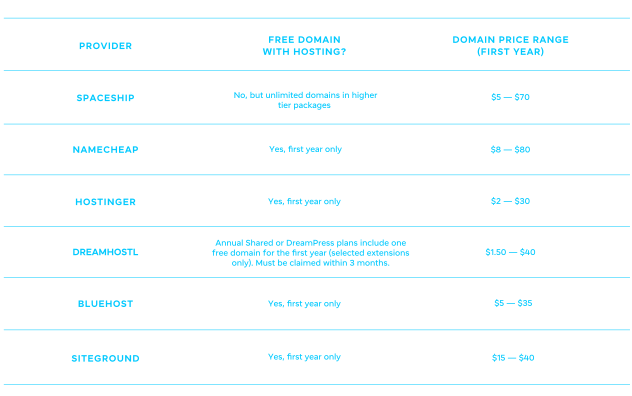
Hosting and domains together form the building blocks of your website. You’ll need both before you can go live.
Many hosting providers let you attach domains to your hosting account, but the number of domains you can connect depends on the plan. For example, the Spaceship Web Hosting Essential plan allows you to host up to 5 domains, while higher-tier plans include unlimited domains, making them ideal for larger operations or those managing multiple websites.
By contrast, Namecheap includes one free domain name (first year only) with the purchase of any annual or biennial Shared Hosting plan, provided the domain is not considered premium. However, keep in mind that only one domain name can be assigned per hosting plan with Namecheap.
Email hosting
Including email with your hosting domain lets you create professional addresses using your site’s domain name. This is more likely to build trust and brand credibility compared to generic services like Gmail or Yahoo. It also keeps everything under one provider, making setup and management simpler, and often comes with features like spam protection, storage, and easy integration with your website.
Spaceship — bundles free professional email (with spam protection, storage, etc.) when you register or host a domain.
Hostinger — includes at least one free business email account with most hosting plans, with the option to add more.
SiteGround — includes unlimited free email accounts with all hosting plans, managed directly from their control panel.
DreamHost — doesn’t bundle free email with shared hosting, but offers email hosting as an affordable add-on (around $1.67/month per mailbox).
Bluehost — includes free email accounts with all hosting plans, managed via webmail or email clients.
Namecheap — includes free email accounts with all Shared Hosting plans; standalone domain purchases include a free trial of Professional Email.
Website builders
Some web hosting providers include website builders that let you create a full website in minutes, great for startups and small businesses with little tech experience.
Providers like Spaceship bundle an AI website builder as a free plugin with their hosting plans, while others offer only limited tools and lock advanced features behind a paywall.
Back-ups
Reliable backups and strong customer support are two essentials that can save you from major headaches. Backups protect your site’s data in case of crashes, hacks, or accidental deletions — but not every host includes them by default.
Some providers, like Spaceship, offer automatic backups as a paid add-on, while others bundle daily or weekly backups into higher-tier plans.
Billing Models
A hosting plan's billing model can make a big difference to both cost and flexibility.
Most providers encourage longer commitments by offering steep discounts if you pay upfront for 1, 2, or even 3 years. While monthly billing gives you flexibility to cancel anytime, it usually comes with higher rates.
Annual or multi-year plans lock you into a lower price but require a bigger upfront investment, which might not be ideal if you’re just starting out or testing a new project.
Some modern providers, like Spaceship, offer a pay-as-you-go billing model. Instead of locking you into a contract, you only pay for the resources you actually use, scaling up or down as needed. This gives you the freedom to start small, avoid heavy upfront website hosting costs, and adapt as your website or business grows.
How much does website hosting cost?
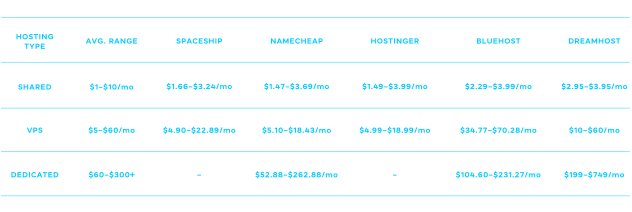
When comparing hosting providers, advertised prices can vary widely depending on the type of hosting and the level of resources included. To give you a clearer picture, here’s what you can realistically expect across the main hosting types. See below for a website hosting cost comparison.
Hidden or additional costs to watch out for
Renewal pricing
Most hosting providers offer a discounted first-year rate, with higher fees kicking in at renewal. This means the long-term cost of web hosting is often higher than your initial payment. However, some providers, like Spaceship, give you the flexibility to renew annually or biennially at a slightly reduced rate, helping keep costs predictable.
Add-ons
Extra features like email, backups, and security tools can quickly add to your hosting bill. That’s why it’s important to understand what you’ll actually need before choosing a plan.
For example, Spaceship includes email and free SSL certificates, but charges extra for automatic backups. Meanwhile, providers like DreamHost charge an additional fee for email.
Overages
Web Hosting plans allocate a certain amount of storage for things like archives, databases, executables, and email storage.
Go over this storage, and your website may become unresponsive, at which time you’ll have to either reduce your memory load or update to a more advanced plan, both of which have their own costs. This is yet another reason why it's important to understand your needs so you can choose a web hosting plan that provides the amount of storage your website needs.
Migration
Moving your website from one hosting provider to another isn’t always as simple as clicking a button. Many providers charge an additional fee to handle the migration for you, which can add to your setup costs.
For example, if you’re not confident in managing the migration yourself, paying for professional assistance ensures your files, databases, and email accounts are moved correctly — minimizing downtime and preventing data loss. On the other hand, more technical users can often migrate manually to avoid these fees.
How to choose the best hosting plan for your budget
For beginners
If you’re just getting started with a blog, an online portfolio, or small landing page, you don’t need to over-invest in server resources like CPUs and SSD storage. A low cost website hosting package, like a shared hosting plan, is probably more than enough for light traffic.
For example, a personal blog with a few posts and images can run smoothly on a shared plan under $5/month. As your audience grows, you can easily upgrade to a plan that supports multiple domains, email hosting, or higher traffic.
For eCommerce
Running an online store means handling sensitive payment data and large product databases. Security and reliability should be your top priorities.
Look for hosting that includes an SSL certificate to secure transactions, automated backups to protect sales data, and higher bandwidth to handle spikes in traffic during promotions or holiday sales.
If you’re looking to start an online store, it’s important to choose a web hosting provider that integrates smoothly with an e-commerce CMS. These platforms give you everything you need to manage your shop. from uploading product images and descriptions to integrating payment gateways and optimizing for SEO.
Keep in mind, though, that while some hosting providers include e-commerce tools as part of their plans, others may charge extra for premium integrations, advanced themes, or transaction fees. Understanding these potential add-on costs upfront will help you avoid surprises as your store grows.
For small businesses
Small business websites often start out modest, with an “About” page, services list, and contact form. You might not need advanced hosting features right away, but you will need room to grow.
A hosting provider with strong customer support and easy scaling options will save you headaches later. For example, a local café might start with shared hosting but later expand to a small eCommerce setup for online orders. Choosing a provider that offers smooth upgrades ensures you won’t need to rebuild your site from scratch.
Why not try Spaceship Web Hosting?
At Spaceship, we believe hosting shouldn’t be complicated or full of hidden fees. Our goals is to give users the tools they need to get online, grow at their own pace, and only pay for what they actually use.
Unlike many providers that lock you into multi-year contracts or hike renewal rates, Spaceship uses a pay-as-you-go pricing model. That means you get full transparency: no surprise charges, no overpaying for resources you don’t need, and the freedom to scale up or down whenever your website demands it.
As your project grows, Spaceship Web Hosting makes it easy to add resources and features, whether that’s more storage, higher bandwidth, or extra domains. without forcing you to migrate or switch plans. This flexibility is why Spaceship has become a trusted choice for startups, bloggers, and creators who want hosting that grows with them.
Hosting doesn’t have to break the bank
Website hosting comes in many forms, and the costs vary just as much. What really matters is understanding the true price of hosting, from storage and bandwidth to hidden extras like renewals, backups, and security tools. By being aware of these factors, you can avoid surprises and choose a plan that fits your needs without overspending.
The key is finding a provider that balances affordability with flexibility and support so you can grow your site confidently.
Frequently asked questions
The average cost of website hosting can range from $2 to $15 per month for shared hosting, while more advanced solutions like VPS or dedicated servers can cost anywhere from $20 to over $100 per month. Ultimately, the cost of website hosting depends on the type of plan, resources, and features you need.
If you’re looking for low cost website hosting, shared hosting is the most affordable choice, with some providers offering plans as low as $2–$3 per month. These plans are ideal for beginners or small websites but come with limited resources compared to VPS or cloud hosting.
Free hosting services exist, but they often come with significant limitations: restricted storage, slower speeds, ads on your site, and no customer support. While “free” sounds appealing, most users find that upgrading to low cost website hosting services is a smarter long-term investment, offering better performance and reliability.
Several factors influence how much website hosting costs, including:
Type of hosting (shared, VPS, cloud, dedicated)
Storage and bandwidth
SSL certificates and security features
Customer support quality
Add-ons like backups, domains, and email
The more resources and features you require, the higher your website hosting services cost will be.
When comparing plans, don’t just look at the price tag. A proper website hosting cost comparison should include performance, scalability, and support. Start with a budget-friendly shared plan if you’re new, but if your site grows, consider upgrading to VPS or cloud hosting. Always balance how much hosting a website costs with the value you get for long-term growth.

Share your thoughts